

Swayambhunath Stupa
About
Overview
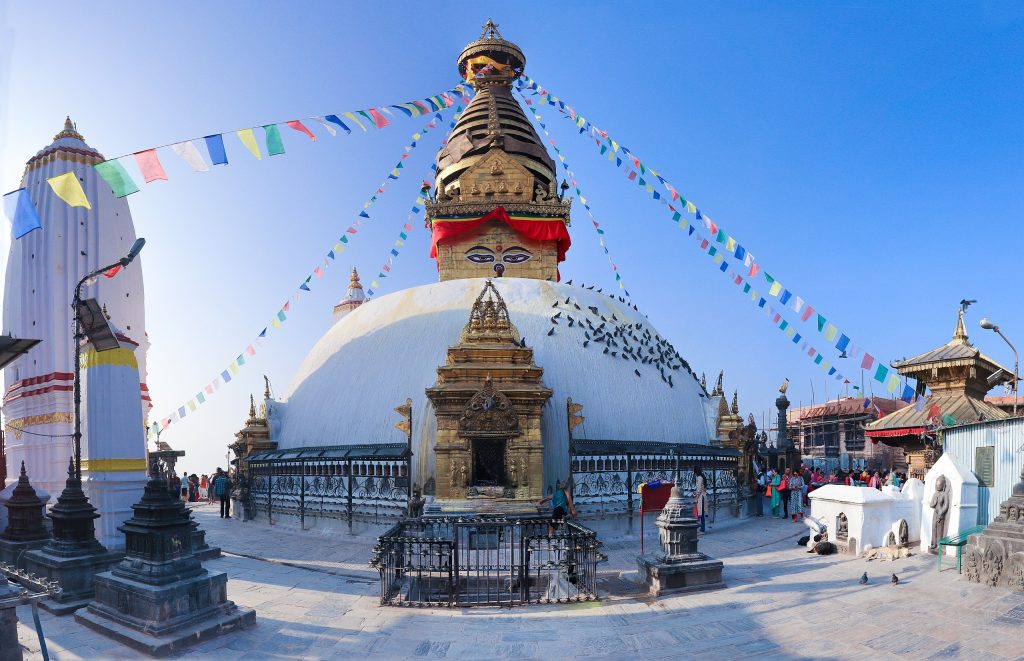
Swayambhunath, also known as Swayambhu, Swayambhu Great Stupa, or Swoyambhu (Devanagari: स्वयम्भू स्तूप; Nepal Bhasa: स्वयंभू), is one of the oldest and most sacred Buddhist pilgrimage sites in the world. Rising atop a forested hill on the western edge of Kathmandu Valley, the stupa overlooks the city and is instantly recognizable by the all-seeing Eyes of the Buddha painted on its golden spire.
The name Swayambhu means “self-arising” or “self-sprung,” referring to the belief that the primordial light of enlightenment manifested here spontaneously. In 1979, Swayambhunath was inscribed as a UNESCO World Heritage Site, honoring its outstanding universal value, ancient history, and living religious traditions.
Cultural, Spiritual, and Historical Significance
Swayambhunath is revered as the abode of the Adi-Buddha (Primordial Buddha) and is venerated by Buddhists across Vajrayāna, Mahāyāna, and Theravāda traditions. It is believed to have been sanctified by Buddhas of the past, including Kakusandha, Koṇāgamana, and Kassapa Buddha, making it one of the most ancient Buddhist stupas still in active worship.
The site is equally sacred to Newar Buddhism, where daily rituals, festivals, and offerings form part of community life. Historically, Swayambhunath has attracted some of the greatest figures of Buddhism, including Emperor Ashoka (3rd century BCE), Nāgārjuna, Vasubandhu, Śāntarakṣita, and Padmasambhava, all of whom are associated with teachings, pilgrimages, or restorations at the hilltop shrine.
Hindu kings of Nepal, especially during the Licchavi and Malla periods, patronized the site, contributing to its architecture and accessibility. This long history has made Swayambhunath a powerful symbol of religious harmony, where Buddhist stupas and Hindu deities coexist in a single sacred landscape.
Architecture and Symbolism
According to Vajrayāna cosmology, Swayambhunath represents the void from which the universe arises:
- White hemispherical dome: the world
- Cubical harmika with Buddha’s eyes: omniscient awareness
- Thirteen gilded tiers (Trayodashabhuvana): stages toward Nirvana
- Five Dhyani Buddhas: cosmic wisdom in five directions
Surrounding the main stupa are shrines, monasteries, vajras, prayer wheels, and the temple of Hariti (Ajima), protector of children and Buddhist teachings.
What Visitors Can Expect
A visit to Swayambhunath offers both spiritual depth and panoramic beauty:
- Sweeping views of Kathmandu Valley from the hilltop
- Devotees performing circumambulation (kora) and spinning prayer wheels
- Monks chanting, butter lamps flickering, and incense drifting through the air
- A unique blend of Buddhist and Hindu shrines in one complex
- Playful resident monkeys—hence the nickname “Monkey Temple”
Visitors can reach the summit via the iconic eastern staircase of 365 steps, a motorable road from the south-west, or a quieter secondary stairway.
Location & Geographic Details
- Place Name: Swayambhunath Stupa (Swayambhu)
- Area: Swayambhu, Kathmandu Metropolitan City
- District: Kathmandu District
- Province: Bagmati Province
- Country: Nepal
- Coordinates: Approx. 27.7149° N, 85.2903° E
- Elevation: Approx. 1,400 meters above sea level
- Setting: Hilltop west of central Kathmandu
Swayambhunath is about 3 km west of Kathmandu Durbar Square and is easily visible from many parts of the valley.
Visitor FAQs
Q: Why is Swayambhunath important?
A: Swayambhunath is one of the most ancient and sacred Buddhist stupas, believed to be self-arisen and associated with multiple Buddhas of the past. It is also a symbol of Buddhist–Hindu harmony in Nepal.
Q: Is Swayambhunath a UNESCO World Heritage Site?
A: Yes. It was designated a UNESCO World Heritage Site in 1979.
Q: How do I reach Swayambhunath?
A: You can climb the eastern staircase (365 steps), take a taxi or vehicle via the south-west road, or walk from central Kathmandu neighborhoods.
Q: What is the best time to visit Swayambhunath?
A: Early morning and late afternoon are ideal for peaceful visits and clear views. The best seasons are October–November and March–April.
Q: Can non-Buddhists visit Swayambhunath?
A: Yes. Visitors of all faiths are welcome. Respectful dress and clockwise circumambulation are encouraged.
Q: Why is it called the Monkey Temple?
A: The hill is home to many monkeys that live freely around the temple complex, adding to its unique character.