

Namo Buddha
About
Overview
Namo Buddha (Nepali: नमोबुद्ध, meaning “Homage to the Buddha”), also known as Takmo Lüjin (Tibetan: སྟག་མོ་ལུས་སྦྱིན་, “Offering of the Body to the Tigress”), is one of the most sacred Buddhist pilgrimage destinations in Nepal. It is located in Namobuddha Municipality, Kavrepalanchok District, within Bagmati Province, approximately 52 kilometers southeast of Kathmandu.
The site commemorates an extraordinary act of compassion by Prince Mahasattva, an early incarnation of Shakyamuni Buddha, who selflessly offered his own body to save a starving tigress and her cubs. This story represents the perfection of compassion (karuṇā) and generosity (dāna), central virtues in Mahayana Buddhism.
Cultural, Religious, and Historical Significance
Namo Buddha is revered as one of the three most important stupas in the Kathmandu Valley, alongside Swayambhunath and Boudhanath. The Namo Buddha Stupa houses sacred bone relics of Prince Mahasattva, making it a deeply venerated site for Buddhists across Asia.
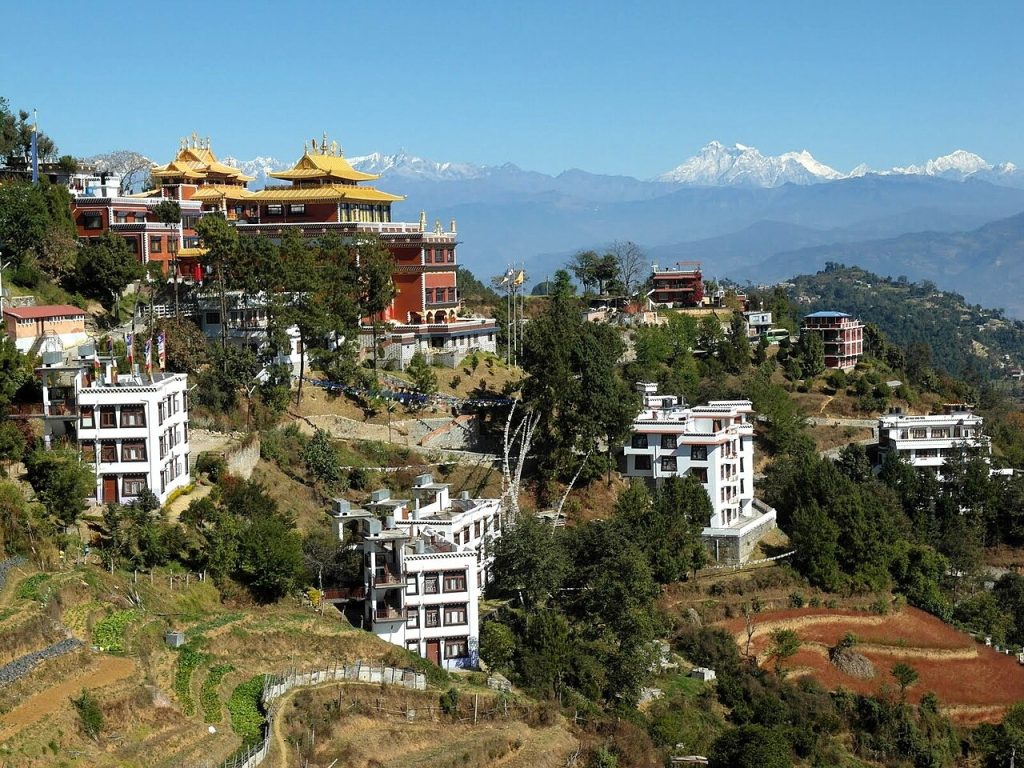
A stone stairway leading through forested hills connects the main stupa to the actual site of the self-sacrifice, now sanctified and preserved beside the Thrangu Tashi Yangtze Choling Monastery. This monastery belongs to the Karma Kagyu tradition and was established under the guidance of Thrangu Rinpoche, a highly respected Buddhist master.
Throughout history, eminent Buddhist scholars and practitioners have paid homage here. In modern times, spiritual leaders and pilgrims from the Nyingma, Kagyu, Sakya, and Gelug traditions continue to visit Namo Buddha, reinforcing its pan-sectarian importance within Tibetan Buddhism.
What Visitors Can Expect
Visitors to Namo Buddha experience a blend of spiritual depth, natural beauty, and cultural harmony:
- A peaceful hilltop stupa with panoramic views of surrounding valleys
- Prayer wheels, mani walls, and monasteries reflecting Tibetan Buddhist architecture
- Forest trails and stone stairways leading to meditation and pilgrimage sites
- A calm atmosphere suitable for meditation, reflection, and learning
- Nearby Panauti town, rich in Newari culture and ancient temples
The environment is respectful and serene, welcoming pilgrims, researchers, photographers, and mindful travelers alike.
Connection to Panauti and Local Traditions
The historic town of Panauti, located about 8 km downhill, is traditionally believed to be the site of Prince Mahasattva’s royal palace. Each year in November, Panauti hosts the Namo Buddha Mela, a religious and cultural festival attracting devotees from across Nepal.
The municipality was formerly known as Dapcha Kashikhanda, later renamed Namobuddha Municipality, reflecting the spiritual importance of the site.
Geographic Location & Accessibility
- Country: Nepal
- Province: Bagmati Province
- District: Kavrepalanchok
- Municipality: Namobuddha
- Distance from Kathmandu: ~52 km southeast
- Nearby Town: Panauti (8 km)
The site sits on a forested ridge within the mid-hill region, offering both scenic and spiritual appeal.
Visitor FAQs
Q: Where is Namo Buddha located?
A: Namo Buddha is located in Namobuddha Municipality, Kavrepalanchok District, Bagmati Province, about 52 km southeast of Kathmandu, Nepal.
Q: Why is Namo Buddha important?
A: It commemorates the self-sacrifice of Prince Mahasattva, an incarnation of the Buddha, and houses his relics, making it one of Nepal’s most sacred Buddhist pilgrimage sites.
Q: How can I reach Namo Buddha from Kathmandu?
A: Visitors can travel by road via Banepa or Dhulikhel. The journey takes approximately 2.5–3 hours by private vehicle or local bus.
Q: What is the best time to visit Namo Buddha?
A: The best time is October to April, when the weather is clear and pleasant. November is especially significant due to the Namo Buddha Mela.
Q: Is Namo Buddha suitable for non-Buddhist visitors?
A: Yes. Visitors of all backgrounds are welcome, provided they maintain respectful behavior and dress modestly.
Social and Demographic Context
Namobuddha Municipality is culturally diverse, with Tamang, Brahmin, Newar, and Chhetri communities forming the majority. The area reflects Nepal’s religious harmony, with Buddhism and Hinduism practiced side by side. Local traditions, languages, and festivals enrich the visitor experience beyond the pilgrimage site itself.
Summary
Namo Buddha is not only a destination but a living symbol of compassion, sacrifice, and spiritual unity. Its combination of historical depth, religious importance, and serene natural setting makes it a must-visit pilgrimage and cultural landmark in Nepal.
Whether you are a pilgrim, scholar, or mindful traveler, Namo Buddha offers a profound encounter with one of the most inspiring stories in Buddhist tradition—set within the peaceful hills of Kavrepalanchok