

Boudhanath Stupa
About
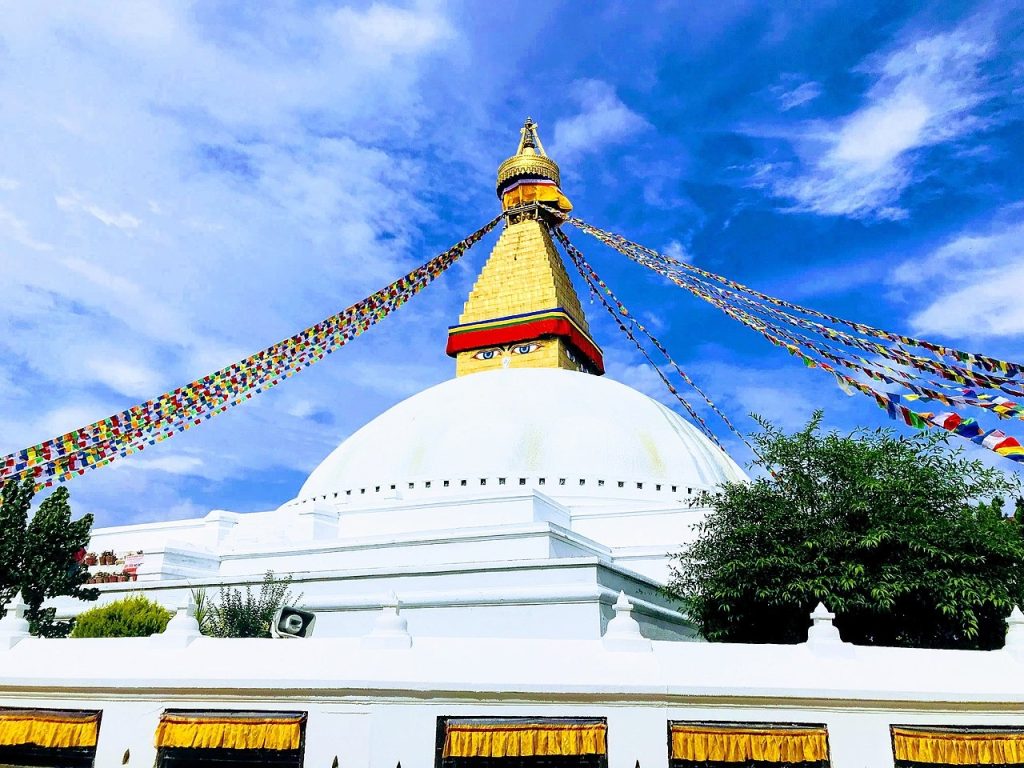
Overview
Boudha Stupa, also known as Boudhanath Stupa, Jarung Kashor, Khasti Chaitya, or Khāsa Chaitya, is one of the most sacred Buddhist monuments in the world and a defining spiritual landmark of Nepal. Located in Boudha, northeast Kathmandu, this immense white-domed stupa is revered as the embodiment of the enlightened mind of all Buddhas and stands at the heart of Himalayan and Tibetan Buddhism.
With its vast mandala structure, Boudha Stupa is the largest spherical stupa in Nepal and among the largest globally. In 1979, it was inscribed as a UNESCO World Heritage Site, recognizing its outstanding universal value and living religious traditions.
Cultural, Spiritual, and Historical Significance
Boudha Stupa is inseparable from the origins and spread of Tibetan Buddhism. According to Tibetan tradition, the stupa was built as Jarung Kashor (“Let it be done, slipped from the tongue”), symbolizing the spontaneous power of enlightened intention. It is believed to contain authentic relics of Kassapa Buddha and Shakyamuni Buddha, along with sacred representations of Body, Speech, Mind, Qualities, and Activities of enlightenment.
For centuries, Boudha lay on the ancient trade route between Tibet and India, where Tibetan merchants paused to pray and offer gratitude. Following the 1959 Tibetan uprising, thousands of Tibetan refugees settled around the stupa, transforming the area into Nepal’s most vibrant center of Tibetan culture. Today, more than 50 monasteries (gompas) surround the stupa, representing all major Tibetan Buddhist traditions—Nyingma, Kagyu, Sakya, and Gelug.
The stupa is also deeply significant to Newar Buddhism, with the shrine of the fierce Dharma protectress Ajima (Mammo Pukkasi / Hariti) guarding its northern entrance, reflecting Kathmandu Valley’s indigenous spiritual heritage.
What Visitors Can Expect
Visitors to Boudha Stupa experience a rare blend of living devotion and everyday life:
- Devotees performing kora (clockwise circumambulation) while spinning prayer wheels inscribed with Om Mani Padme Hum
- Monks in maroon robes chanting mantras and conducting rituals
- Colorful prayer flags fluttering overhead, carrying prayers on the wind
- Rooftop cafés and monasteries offering serene views of the stupa
- A calm, meditative atmosphere that contrasts with the bustle of central Kathmandu
The stupa is especially atmospheric at sunrise and sunset, when butter lamps glow and the iconic all-seeing eyes of the Buddha watch silently over the pilgrims.
Location & Geographic Details
- Place Name: Boudha Stupa (Boudhanath Stupa)
- Area: Boudha, Kathmandu Metropolitan City
- District: Kathmandu District
- Province: Bagmati Province
- Country: Nepal
- Coordinates: Approx. 27.7215° N, 85.3616° E
- Setting: Northeast Kathmandu Valley, historically surrounded by rice paddies
Boudha lies about 6–7 km northeast of Thamel and Kathmandu Durbar Square, near the ancient route from Sankhu into the valley.
Visitor FAQs
Q: Why is Boudha Stupa important?
A: Boudha Stupa is one of the holiest Buddhist sites in the world, believed to embody the enlightened mind of all Buddhas and closely linked to the rise of Tibetan Buddhism.
Q: Is Boudha Stupa a UNESCO World Heritage Site?
A: Yes. Boudha Stupa was designated a UNESCO World Heritage Site in 1979.
Q: How do I reach Boudha Stupa from Kathmandu city?
A: Boudha Stupa is about 6–7 km from central Kathmandu. It is easily reached by taxi, ride-hailing services, or local buses heading toward Boudha/Jorpati.
Q: What is the best time to visit Boudha Stupa?
A: Early morning and sunset are ideal for peaceful visits. The best seasons are October–November and March–April, when weather and visibility are best.
Q: Can non-Buddhists visit Boudha Stupa?
A: Yes. Visitors of all backgrounds are welcome. Respectful behavior—such as walking clockwise and dressing modestly—is encouraged.
Q: What was damaged in the 2015 earthquake?
A: The stupa’s spire was severely damaged, but it was fully restored and reconsecrated, reopening in November 2016 through global Buddhist support.